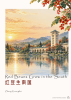
Red Beans Grow in the South
Synopsis
Among the countless poems of the Tang dynasty, few lines are more tender or moving than these from Wang Wei’s “Longing”:
Red beans grow in the South;
How many branches bloom when spring returns?
Everyone knows that the red bean is an emblem of longing, yet few realise that the “South” in Wang Wei’s poem refers to the fertile lands of Lingnan in the south of China, and that its red beans are those of the red-bead tree, which still grows widely across the region. Rooted in China’s southern soil, the tree is nourished by warm winds and abundant rain. It puts forth new branches in spring and bears scarlet seeds in autumn. Lustrous and pure in colour, gentle in appearance yet enduring in nature, these seeds have for centuries been cherished by poets and scholars as symbols of deep affection, sincerity, and steadfast devotion. They have become a poetic emblem unique to the South.
As South China Business College, Guangdong University of Foreign Studies (hereafter “Nanguo,” a Chinese name meaning “the South”) celebrates its thirtieth anniversary, this collection takes its title, Red Beans Grow in the South, from Wang Wei’s celebrated line. The title carries a twofold resonance and a depth of meaning.
First, it speaks to the landscape and literary heritage of the South. Nanguo is situated in Guangzhou, in the heart of Lingnan, amid a landscape rich in poetic beauty. Its setting and cultural inheritance echo from afar the geography and literary tradition embodied in Wang Wei’s verse. Here, the poetic vision of the Tang dynasty, carried across a thousand years, takes living form in the scenery of the campus and the vibrant everyday life of Nanguo.
Downloads
Published
October 10, 2026
Copyright (c) 2026 Leoman Publishing
Details about this monograph
ISBN-13 (15)
978-1-9192486-9-1
Physical Dimensions
How to Cite
Red Beans Grow in the South. (2026). Leoman Publishing. https://doi.org/10.64699/27414/MFRM5762
